Do You Pay Tax on Casino Bonus Winnings in Ireland?
KingCasinoBonus.ie receives money from casino operators every time someone clicks on our links, influencing product placement. However, the compensation we receive does not influence our evaluation process, analysis and recommendations. We always provide objective, honest verdicts to support informed choices.

Are you wondering if you need to report your gambling winnings to the Revenue? That depends on how you gamble. Occasional winnings aren’t taxed, but if you’re a professional gambler, things change. Let’s find out together which category you fall into and how things work in Ireland.
On this page
- Are Gambling Winnings Tax-Free in Ireland?
- Why Ireland Doesn’t Tax Casual Winnings
- When Gambling Becomes Your Main Source of Income
- The Little-Known Tax Rule About Interest on Gambling Winnings
- Why Gambling Operators Pay Tax When Players Don’t
- What Irish Players Need to Know About Gambling Winnings and Taxes
- The Bottom Line
- How We Verified This
Are Gambling Winnings Tax-Free in Ireland?
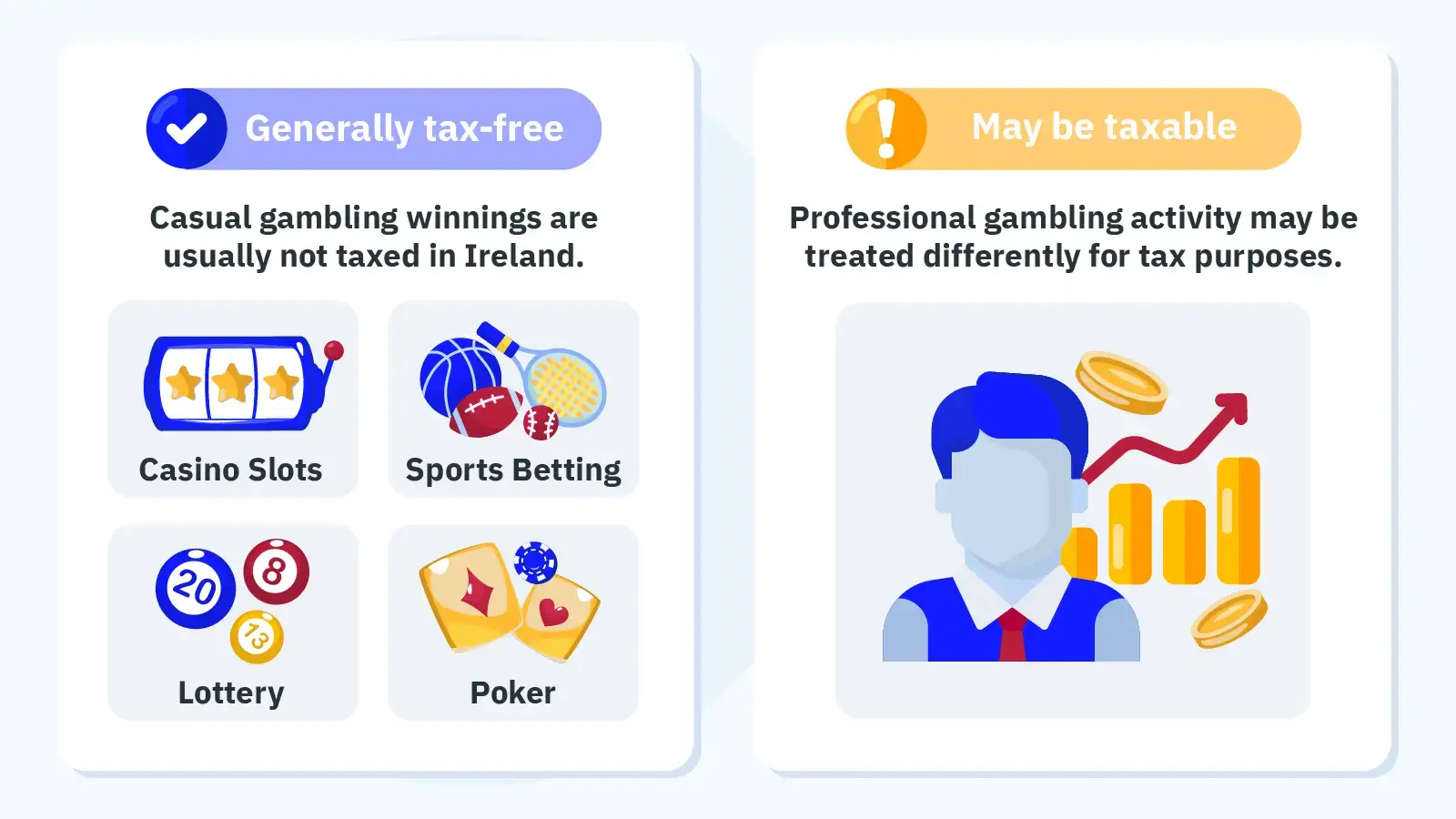
Occasional winnings from gambling are not taxed. It doesn’t matter whether you’re playing at a casino, placing sports bets, playing the lottery, or even playing poker. If you deposit at a licensed casino and win, you’ll keep the entire amount.
The Revenue makes a clear distinction between the different types of gambling winnings. If you gamble purely for fun, you don’t have to pay any tax, including income tax. And it doesn’t matter how much you win. Whether you’ve won €20 or €20.000 the same rule applies. The amount of the winnings does not change the situation in any way. There are two more exceptions you should be aware of, we’ll discuss them a little further down!
Why Ireland Doesn’t Tax Casual Winnings
There is a clear distinction between the money you earn through work and the money you win from gambling. The money you earn from your salary or rent is taxed, whereas money won from gambling is not.
To better understand the difference, let’s look at two specific examples. If a person earns €40,000 a year in salary, they must pay Income Tax, PRSI, and USC on that money. On the other hand, if another person wins €4,000 on slot machines, they do not pay tax on that money. The money is considered a windfall.
When Gambling Becomes Your Main Source of Income
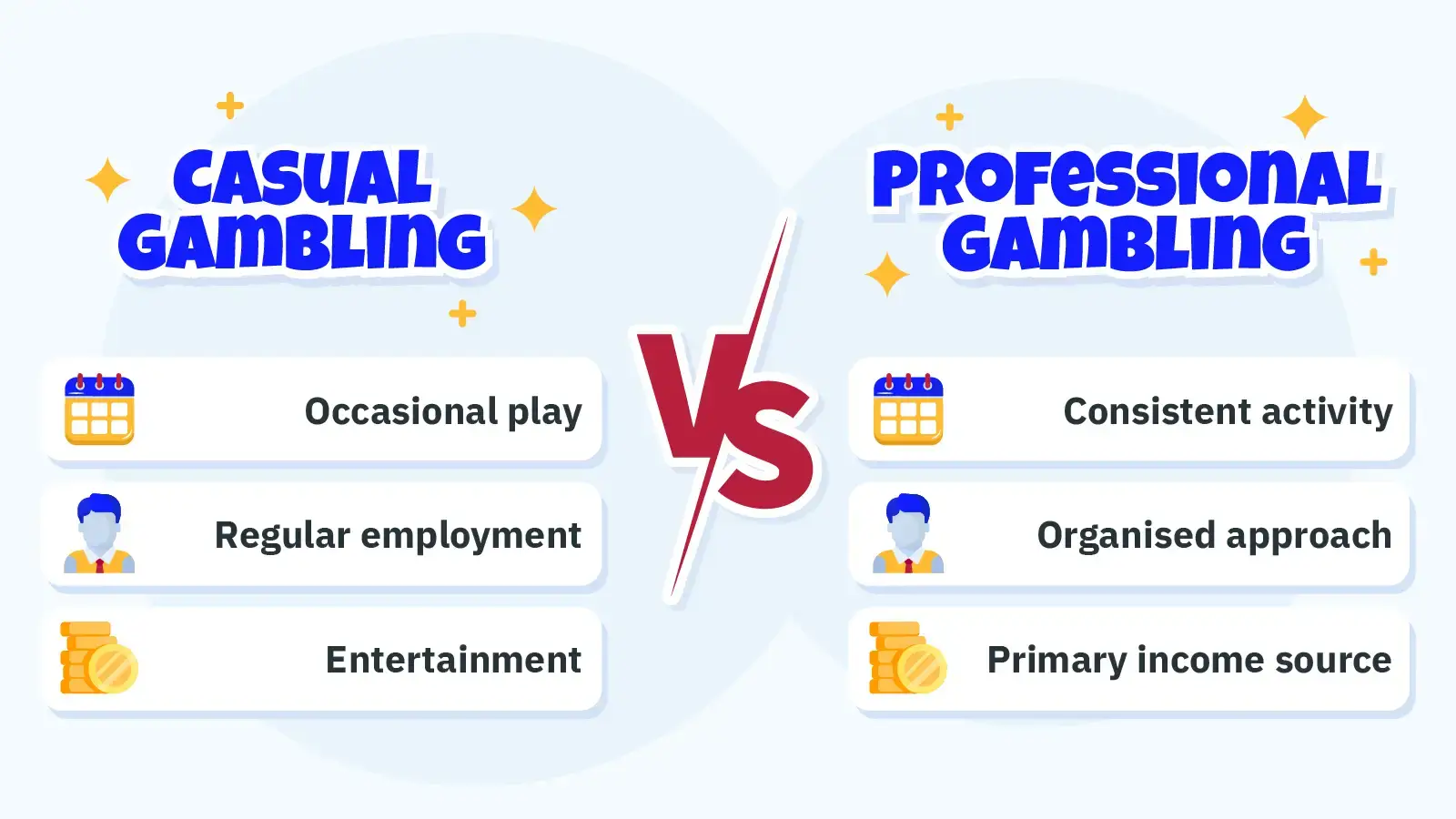
If gambling is your primary source of income and you engage in it as a full-fledged occupation, the Revenue Agency may consider this activity a form of business or even a profession and may tax your profits just as it does other self-employment income.
The Revenue and the courts evaluate this situation as a whole. It matters whether gambling is a consistent and wellorganized activity, as well as whether it is your actual source of income. However, no single criterion taken on its own is sufficient to determine the classification.
This scenario applies to very few people specifically, someone who engages exclusively in gambling and has no other source of income. It does not apply to someone who gambles only on weekends and has a fulltime job. What maters is how the activity unfolds over time.
The Little-Known Tax Rule About Interest on Gambling Winnings
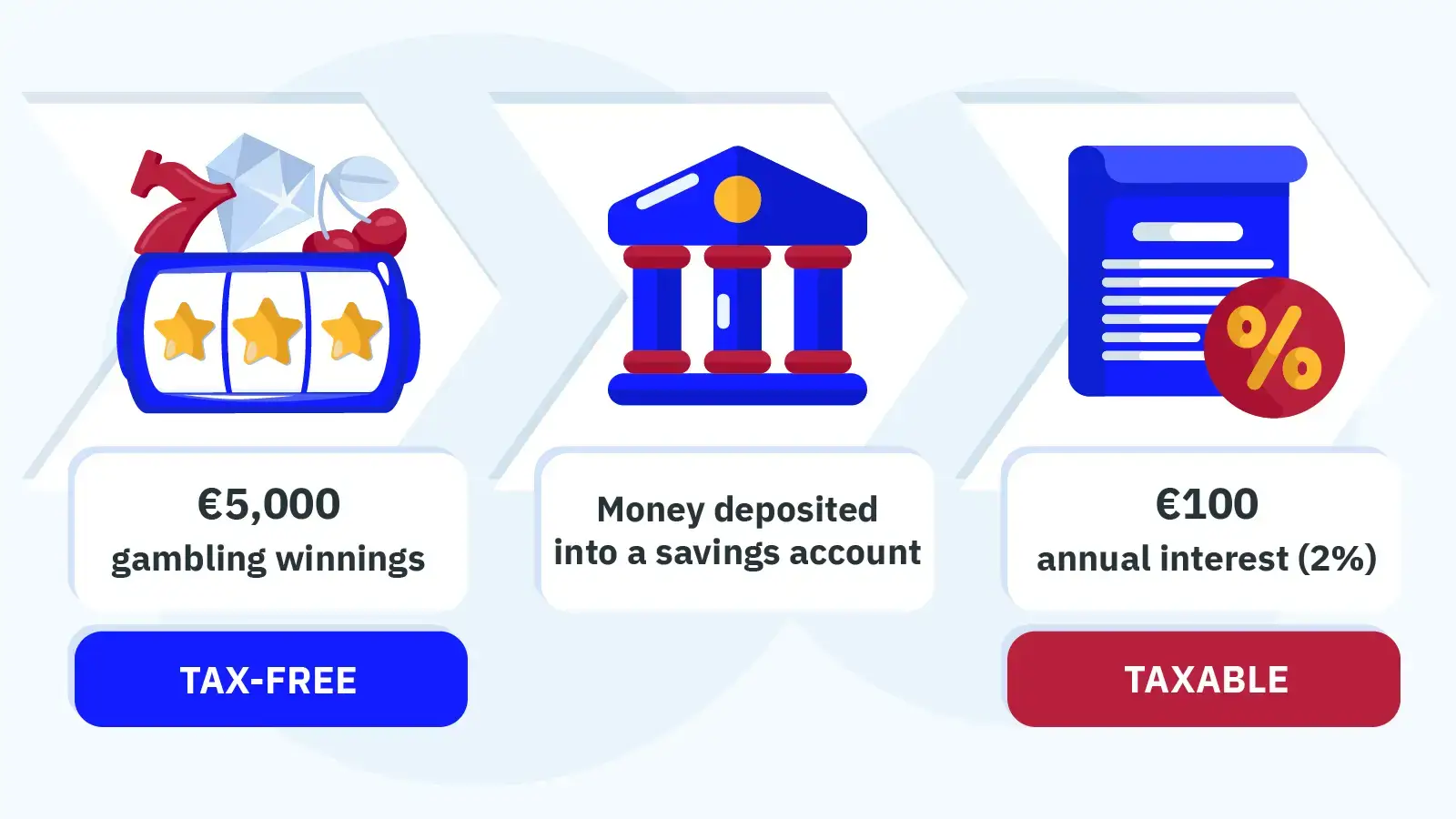
There’s one thing that might take you by surprise. Winnings from gambling are tax-exempt, but if you deposit the money into an account, the interest earned on that money is no longer exempt from taxes.
Let’s look at a concrete example. You won €5,000 from a jackpot. And you deposit the money into a savings account. The money isn’t taxed, no matter how long you keep it in the account. Things change, however, when the account starts earning interest. If the bank offers you an annual interest rate of 2%, that means an additional €100 after 12 months and this money isn’t considered gambling winnings, it’s regular income. The bank withholds €33 from the 100 before the interest reaches your account.
It’s important to remember that this isn’t a special rule that applies only to gambling winnings. The DIRT tax applies to interest earned on any savings account in Ireland. That’s how it will be applied now as well.
Why Gambling Operators Pay Tax When Players Don’t
Just because you don’t pay tax on your winnings doesn’t mean the government doesn’t collect taxes from this activity. However, the tax liability isn’t yours, it’s the operator’s. Every bookmaker that accepts bets pays a 2% tax called the Remote Betting Duty. When it comes to betting exchanges, the rate is higher, 25% and is called the Betting Intermediary Duty; it’s calculated based on the commission collected.
Another important point we want you to know is that this tax is calculated based on the total volume of wagers. So we’re not talking about the operator’s profit. Here we can see a difference compared to other countries where the tax is applied to gross revenue.
In Ireland, this means that the operator owes the tax for every euro wagered on the platform. This amount is paid directlly to Revenue and is not withheld from your winnings as a customer. So, the two things are not contradictory. Your winnings are tax-free. Why? You’re not responsible for paying taxes on them! The casino is responsible for that. However, we recommend that you play only at licensed casinos. As part of our process for evaluating licensed casinos in Ireland, we verify this before recommending a site.
What Irish Players Need to Know About Gambling Winnings and Taxes
Things are much simpler than they seem at first glance. Occasional winnings from casino games, sports betting, the lottery, or poker are not considered taxable income. So, you don’t have to report this money on your tax return.
Let’s take a look at your specific situation, though:
- You gamble occasionally, have a job, and other sources of income. In that case, your winnings are clearly not taxable, and you don’t need to report them.
- Gambling is your main source of income. This is a regular activity that supports you financially. In this case we recommend that you seek advice from a tax advisor.
- You’ve deposited your winnings into a bank account and now the money is earning interest. Only this interest is taxable, the original amount remains tax-free.
We’re sure that most players fall into the first category. The second applies to only a small number of people.
Don’t forget to check whether the operator is licensed before you sign up at a casino. Or, you can choose a casino directly from our website, since we only feature licensed casinos. However, we’d like to emphasize one important point. Any win comes with the risk of losing real money. Even though winnings aren’t taxed in Ireland, that doesn’t mean you should increase your bets or play more than you can afford.
The Bottom Line
If you bet or gamble at a casino occasionally, things are pretty simple when it comes to taxes. You don’t pay tax on the money you win, nor do you have to report it to the Revenue.
There are also two situations worth keeping in mind: if gambling becomes your main source of income, or when the winnings you deposit in the bank earn interest. Of course, these are fairly rare cases, but it’s important to be aware of them.
We believe the most important thing is to distinguish between the amount you initially win and the interest that this amount may generate. If gambling is more of a professional activity for you, we recommend seeking advice from a tax advisor.
How We Verified This
We independently verified all information related to legislation and taxation. We also consulted materials published by Revenue.ie regarding tax on bank interest and statistics on betting taxes. We analyzed the Taxes Consolidation Act 1997. We didn’t stop there, we also checked independent sources of tax information. Even the national responsible gambling helpline was carefully reviewed by our team, directly from its official website.
There’s one thing we want you to know. No matter how large your winnings are, the fact that they aren’t taxed doesn’t change the reality of gambling. When you gamble, you’re risking real money. If you feel that gambling is no longer fun for you and is causing you harm, you can get free support through GamblingCare.ie or by calling the helpline at 1800 936 725.
The KingCasinoBonus team wrote this article strictly for informational purposes. Therefore, do not treat it as financial or tax advice.
